Sillitoe
This is one variant — a specific cloth: this exact thread count and colourway, with its own provenance below. It is one weaving of the sett (the scale-free proportion — the same cloth at any scale or shade), whose colour order is pattern BW.
Part of the Sillitoe tartan — the named design grouping this sett with its other cloths.
Sourced from register-of-tartans. It is a 2 stripe tartan.
Original link https://www.tartanregister.gov.uk/tartanDetails.aspx?ref=3786
2 attestations — the source records this cloth was collapsed from (oldest owns this page)
- 01/01/1932 — Sillitoe (register-of-tartans, record)
This is the name given to the blue and white chequered band worn around their hats by many of the world's police forces. Strictly speaking it isn't a tartan and Sir Percy Sillitoe (Chief Constable of Glasgow) didn't design it - it had existed for about 100 years as an Heraldic symbol in many Scottish coats-of-arms. Highland soldiers are said to have woven white ribbons into their black hatbands, thus creating a chequered effect. Sir Percy - answering criticism that it was difficult for the public to differentiate between the police and bus conductors and other uniformed officials, introduced the three line chequered bands in 1932. The experiment was a success and the idea spread across the world with the ultimate accolade being its adoption by the European Union as the universal symbol of the police. - 1932 — Sillitoe (Corporate) (tartans-authority, record)
This is the name given to the blue and white chequered band worn around their hats by many of the world's police forces. Strictly speaking it isn't a tartan and Sir Percy Sillitoe (Chief Constable of Glasgow) didn't design it - it had existed for about 100 years as an Heraldic symbol in many Scottish coats-of-arms. Highland soldiers are said to have woven white ribbons into their black hatbands, thus creating a chequered effect. Sir Percy - answering criticism that it was difficult for the public to differentiate between the police and bus conductors and other uniformed officials, introduced the three line chequered bands in 1932. The experiment was a success and the idea spread across the world with the ultimate accolade being its adoption by the European Union as the universal symbol of the police. Sir Percy was Director General of MI5 the UK's internal security service from 1946 to 1953.
Dataset — provenance for this record, inherited from the source manifest
- source
- Scottish Register of Tartans
- data captured from
- https://github.com/thetartan/tartan-database/blob/master/data/register-of-tartans/data.csv
- data date
- 1932 (this record)
- licence
- Crown copyright
Capture chain — the hands this data passed through, oldest first; each capture carries its own licence
- Scottish Register of Tartans · Crown copyright
the living register — still published by National Records of Scotland - thetartan/tartan-database 2016-2017 · CC BY-NC-ND 4.0
Levko Kravets's frozen compilation — the capture we vendored, and where its CC licence text came from - this dictionary captured 2026-06-10 · commit 5bf86c7566
each re-capture is a git commit to data/sources
Register references
External register numbers recorded for this tartan.
- Scottish Register of Tartans: 3786
- Scottish Tartans Authority (ITI): 6430
Thread count
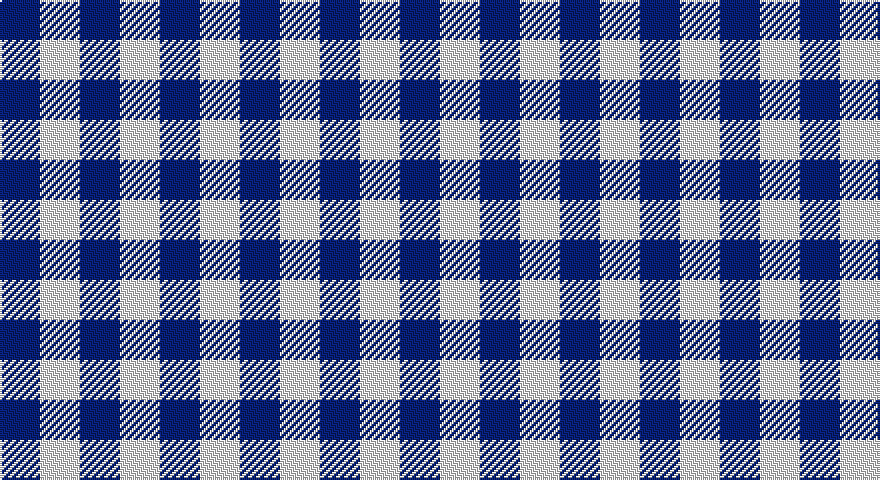
DB/20 W/20
One full sett is 40 threads.

Palette
| Colour | Shade | OKLCh |
|---|---|---|
| DB | #082077 #082077 | oklch(30.0% 0.149 265.1) |
| K | #000000 #000000 | oklch(0.0% 0.000 0.0) |
| W | #F7F7F7 #F7F7F7 | oklch(97.6% 0.000 89.9) |
Sample pattern
Nearest tartan variants
The nearest existing variants by ΔTartan distance, with this cloth at the top so the swatches line up against it.











Neighbour map
Every grey dot is one of 13662 variants placed by the first two principal components of the ΔTartan feature space (42% of its variance). Red is this tartan; blue dots are its nearest — click one to open its page. The map is a flat projection of a many-dimensional space — how to read it.
ID: /variants/s2/db1w1~x20/